About Project:
This project was inspired by Jean Piaget's concept of disequilibrium from his book The Psychology of Intelligence. What happens when the mind encounters something it cannot immediately understand?
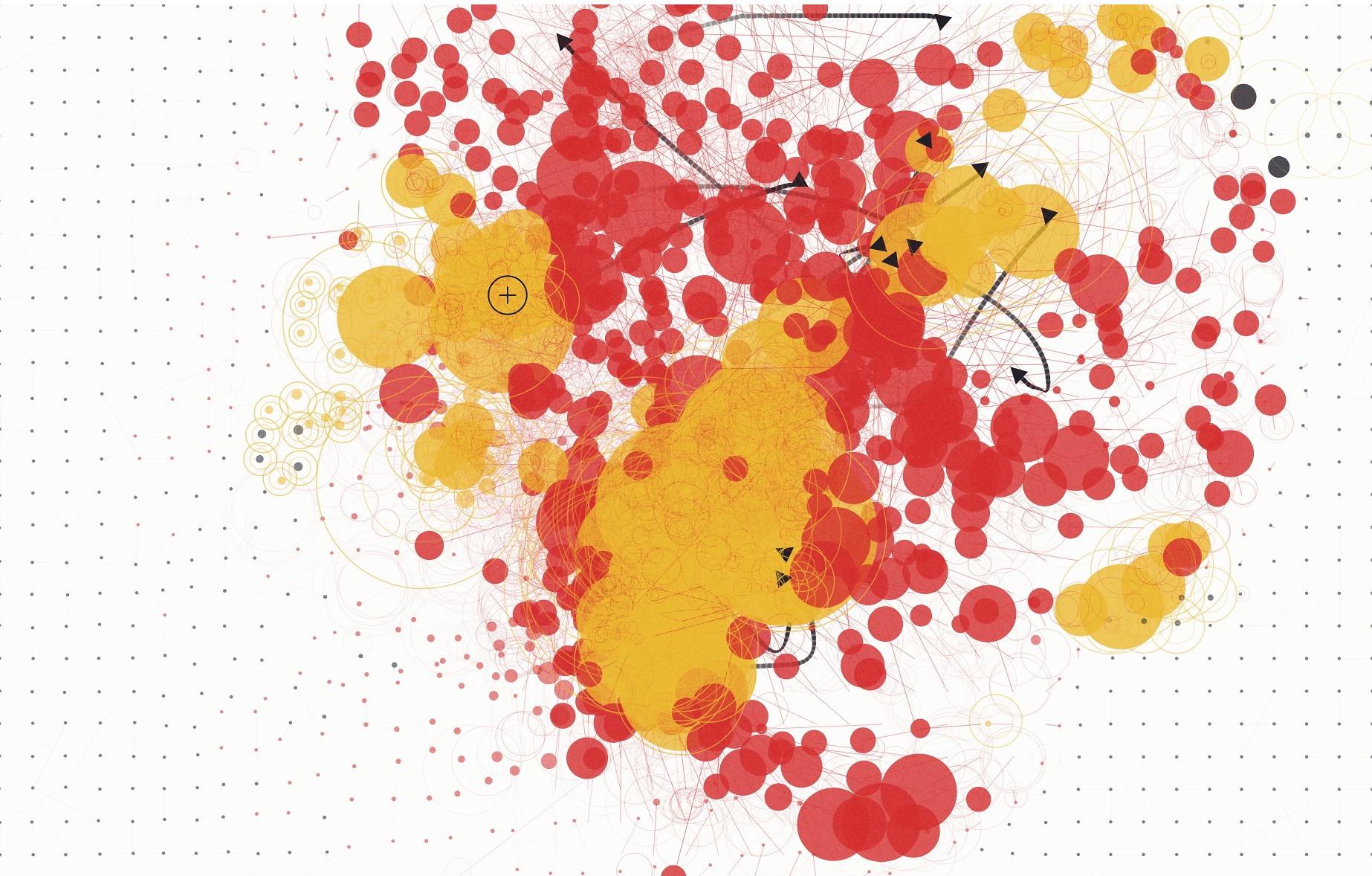
The field on screen is made of nodes. Each node holds its own schema — a set of expectations built from experience. Triangles move through the field carrying stimuli. When a stimulus arrives, each node makes a decision: fit the new information into what it already knows (assimilation), or restructure itself to make room for something genuinely new (accommodation).
The four-stage buttons shift the rules of the field. They follow Piaget's four stages of cognitive development, from sensing only the present moment, to systematic reasoning, to abstract thought that reaches beyond what is directly visible.
Sensorimotor Stage
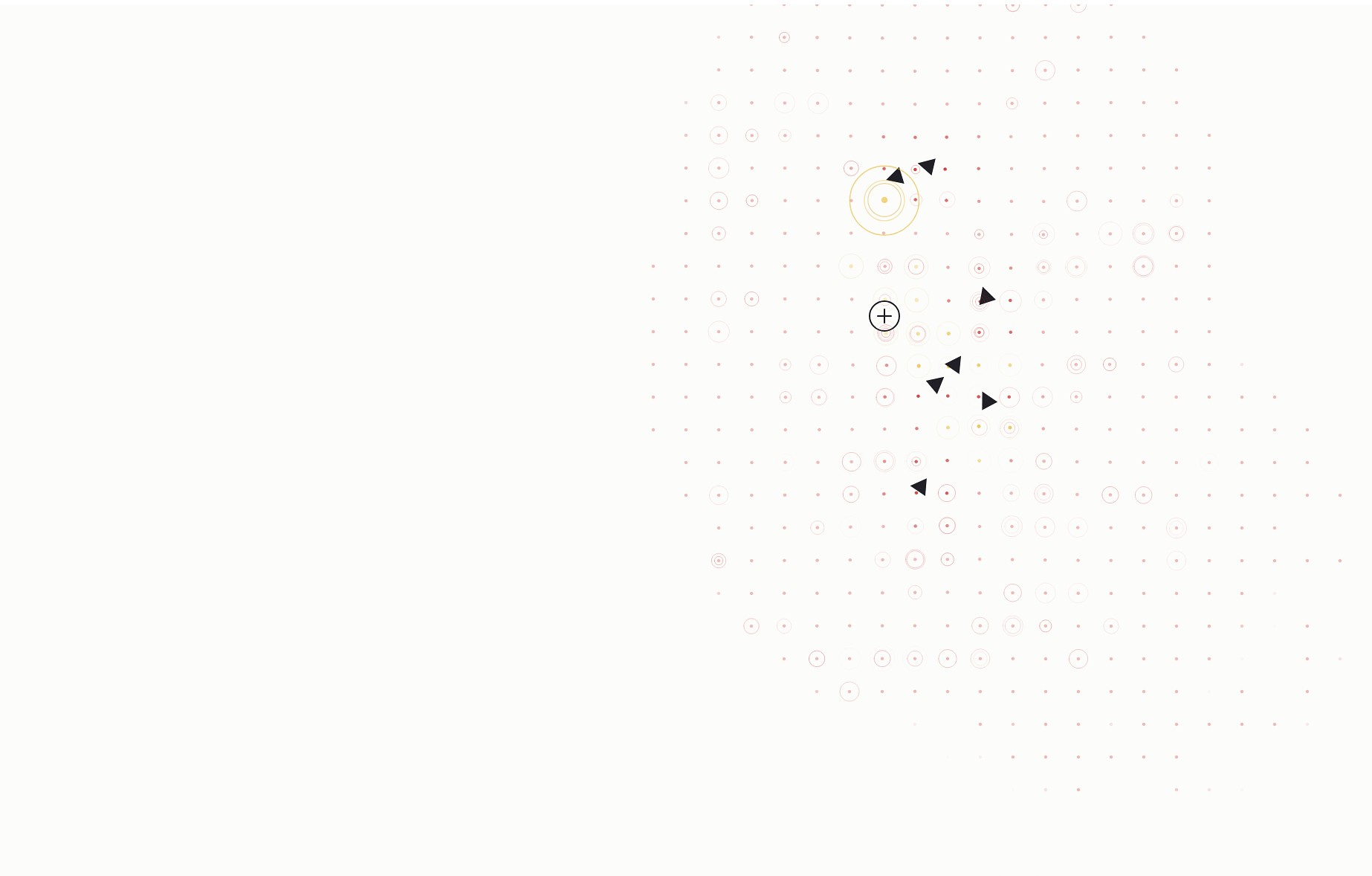
Piaget observed that infants in this stage learn entirely through the senses and physical movement. There is no memory of the past and no anticipation of the future. The world exists only in the present moment.
Preoperational Stage
Children in this stage begin to use language and symbols. But they see the world only from their own point of view. They cannot yet understand that others perceive things differently.
Concrete Operational Stage
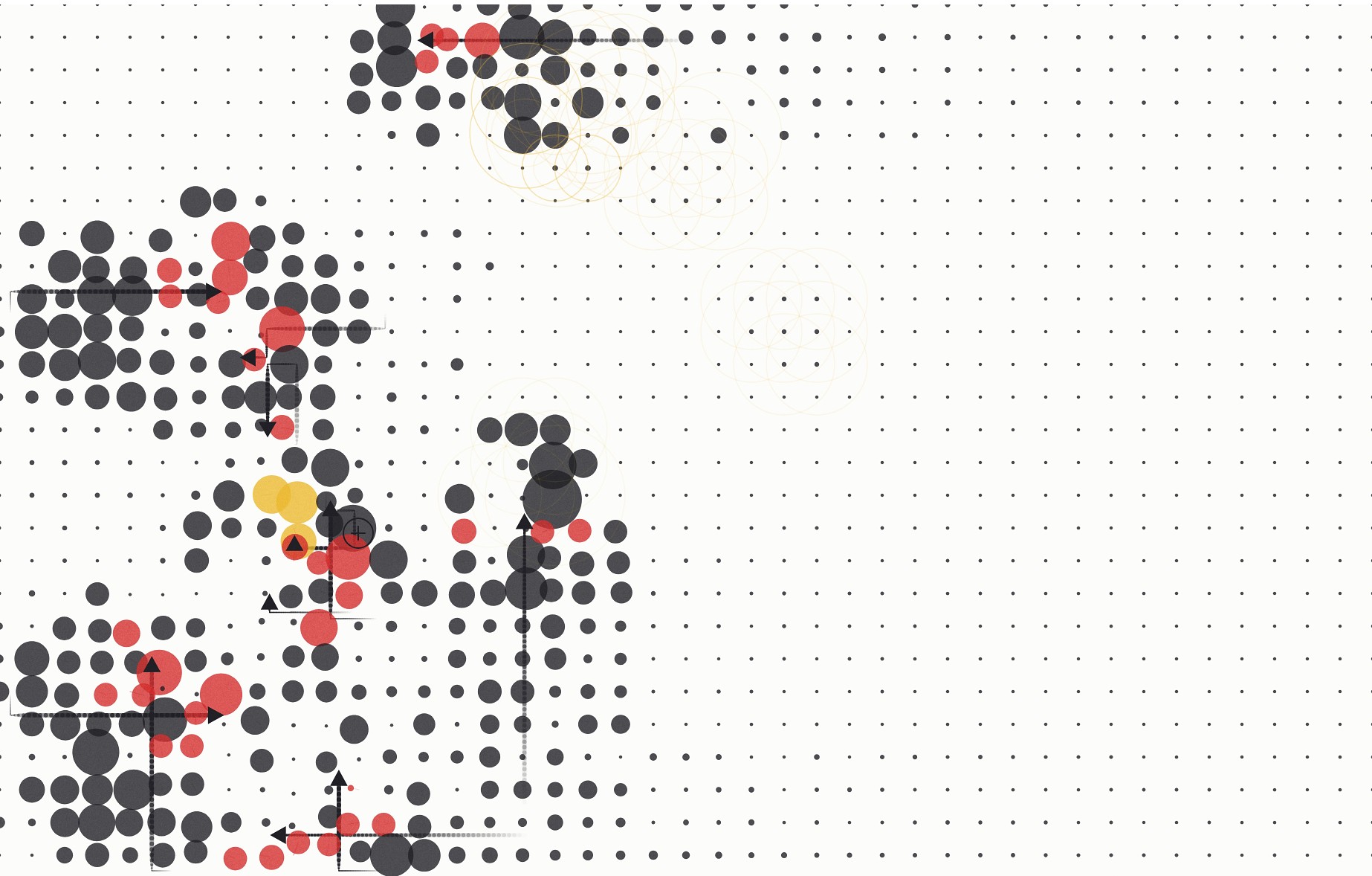
Children begin to reason logically. But only about things they can directly observe or touch. Abstract ideas remain out of reach.
Formal Operational Stage
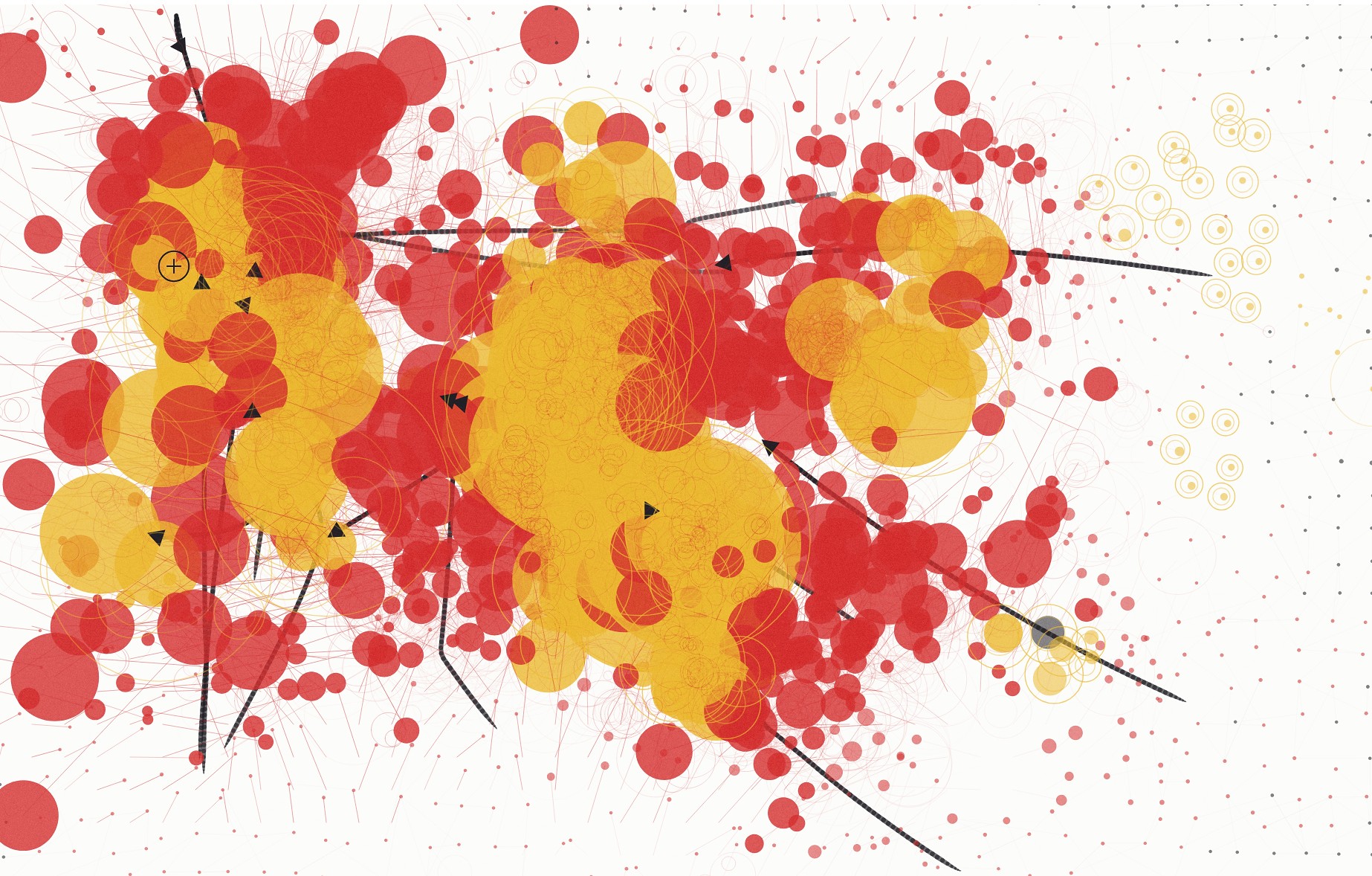
The mind becomes capable of abstract thought. It can reason about things that are not present, consider hypothetical situations, and follow long chains of logic.
Sound is part of the field. Each stage has its own audio character. The piece produces ambient sound on its own. Moving a cursor or finger close to any node adds an external tone.
User Guide:
Buttons
Stage (Sensori / Pre-Op / Concrete / Formal):
Changes the rules of the field. Each stage affects how nodes perceive and respond to stimuli, and how the field sounds.
Sound On / Off:
Turns all audio layers on or off.
Reset:
Clears the field and restarts from the beginning.
Sliders
Stimulus:
Number of agents moving through the field.
Memory:
How long movement traces remain visible.
Openness:
How sensitive nodes are to incoming stimuli.
Tension:
Baseline tolerance across the whole field.
Interaction
Indicator:
Drag the crosshair to move the center of agent activity.
Cursor / Touch:
Move your cursor or finger close to any node to trigger a sound.
This work is licensed under CC BY-NC-SA 4.0


Sensorimotor Stage
Concrete Stage

Preoperational Stage
Formal Stage
ความขัดแย้งของการรับรู้ใหม่
งานชิ้นนี้เริ่มจากการอ่านหนังสือของคุณ Jean Piaget นักจิตวิทยาชาวสวิส เกี่ยวกับคำถามที่ว่าเกิดอะไรขึ้นเมื่อสมองพบกับสิ่งที่ยังไม่รู้จัก
สนามบนหน้าจอ แทนสนามความคิดของมนุษย์ ประกอบด้วยจุด (node) แต่ละจุดมีฐานความคิด (schema) เป็นของตัวเอง สามเหลี่ยมที่วิ่งอยู่คือสิ่งแปลกปลอม (stimulus) เมื่อสิ่งแปลกปลอมเข้ามา แต่ละจุดตัดสินใจว่าจะผนวกสิ่งใหม่เข้ากับสิ่งที่รู้อยู่แล้ว (assimilate) หรือปรับตัวเองเพื่อเปิดรับสิ่งนั้น (accommodate)
ปุ่มทั้งสี่เปลี่ยนกติกาของสนามความคิด ตามขั้นพัฒนาการของ Piaget ตั้งแต่การรับรู้เฉพาะสิ่งที่อยู่ตรงหน้า ไปจนถึงการคิดแบบนามธรรมที่เชื่อมโยงสิ่งที่ไม่ได้อยู่ตรงหน้า
Sensorimotor Stage
Piaget สังเกตว่าเด็กในวัยนี้เรียนรู้ผ่านประสาทสัมผัสและการเคลื่อนไหวร่างกายเพียงอย่างเดียว ไม่มีความทรงจำในอดีต ไม่มีการคาดการณ์อนาคต โลกมีอยู่เฉพาะในขณะนั้น
Preoperational Stage
เด็กเริ่มใช้ภาษาและสัญลักษณ์ได้ แต่ยังมองโลกจากมุมของตัวเองเท่านั้น ยังไม่เข้าใจว่าคนอื่นอาจมองสิ่งเดียวกันต่างออกไป
Concrete Operational Stage
เด็กเริ่มใช้เหตุผลได้อย่างเป็นระบบ แต่ยังต้องอาศัยสิ่งที่มองเห็นหรือจับต้องได้จริง ยังไม่สามารถคิดแบบนามธรรมได้
Formal Operational Stage
สมองเริ่มคิดแบบนามธรรมได้ สามารถใช้เหตุผลกับสิ่งที่ไม่ได้อยู่ตรงหน้า ตั้งสมมติฐาน และเชื่อมโยงความคิดที่ซับซ้อนได้
การออกแบบเสียงประกอบเป็นส่วนหนึ่งของงาน โดยแต่ละ stage มีเสียงเป็นของตัวเอง พอดีผมชอบดนตรี ambient ไหนไหนก็ทำงานนี้แล้วก็เลยลองเพิ่มความเป็น ambient synthesizer ที่สังเคราะห์ขึ้นมาจากปฏิสัมพันธ์ของภาพที่เปลี่ยนแปลงตลอดเวลาครับ
ขอบคุณครับ
Saranont Limpananont
2026.04.14
*This program was made using p5.js, a JavaScript library for creative coding.
Appendix A: Sound Design
Scale
All audio uses A Mixolydian A B C♯ D E F♯ G. The scale is open and slightly unresolved, neither fully major nor fully minor.
Audio Layers
Layer 1: Foundation
A sub drone at A1 (55 Hz) and A2 (110 Hz) runs continuously beneath all stages. A chord pad plays above it. Each part of the chord has its own slow tremolo (0.05–0.11 Hz) and stereo position, so the texture breathes and shifts over time rather than sitting still.
Layer 2: Conflict Response
Active only in the Formal stage. When a node experiences strong conflict, the disturbance travels through the field as ripple sounds. Rare long-range connections produce a separate, wider interval event when they fire.
Layer 3: Proximity
When a cursor or finger comes close to a node, a note from the current stage's chord pool plays. Each proximity event produces four echoes that decay over two seconds.
Layer 4: Stage Noise
Sparse background events that change with each stage: short sine transients (pip), narrow bandpass noise bursts (creak), and FM metallic transients in Formal. Rate and harmonic complexity increase from Sensorimotor to Formal.
Chord Voicings per Stage
Sensorimotor uses a chromatic cluster, A B♭ C G with an added D, with no tonal center, reflecting undifferentiated perception. Preoperational moves to Am9 (A C E G B), minor and self-contained. Concrete opens into Amaj9 add13 (A C♯ E G♯ B F♯), brighter and more ordered. Formal does not hold a fixed chord. At low conflict, the field plays Asus2 (A E B), which has no third and sits between major and minor. As conflict rises, it shifts to Asus4 (A D E), suspended and unresolved. At high conflict, it moves to A5 with a flat seventh (A E G), tense but without a clear mode. The shift between these states happens automatically, based on the average conflict level across the field every two seconds.
Proximity Note Pools
Each stage draws from a dedicated pool of frequencies within A Mixolydian. Sensorimotor uses a Gmaj7 voicing, rootless and floating. Preoperational uses Bm9, darker and more enclosed. Concrete uses F♯m7, clearer but still minor. Formal draws from A9 across four octaves, wide and abstract.
Composition Method
Notes are scheduled using independent timeout loops rather than a fixed clock. Each voice reschedules itself with a slight random variation. This approach was inspired by Brian Eno's ambient music. I do not know how he did it, but I wanted to see if I could create the same sense of drift in this piece.